Big Ideas, Real Impact.
Follow along with the RISING coalition as they work to implement resiliency strategies.


RISING Cross-State Workshop
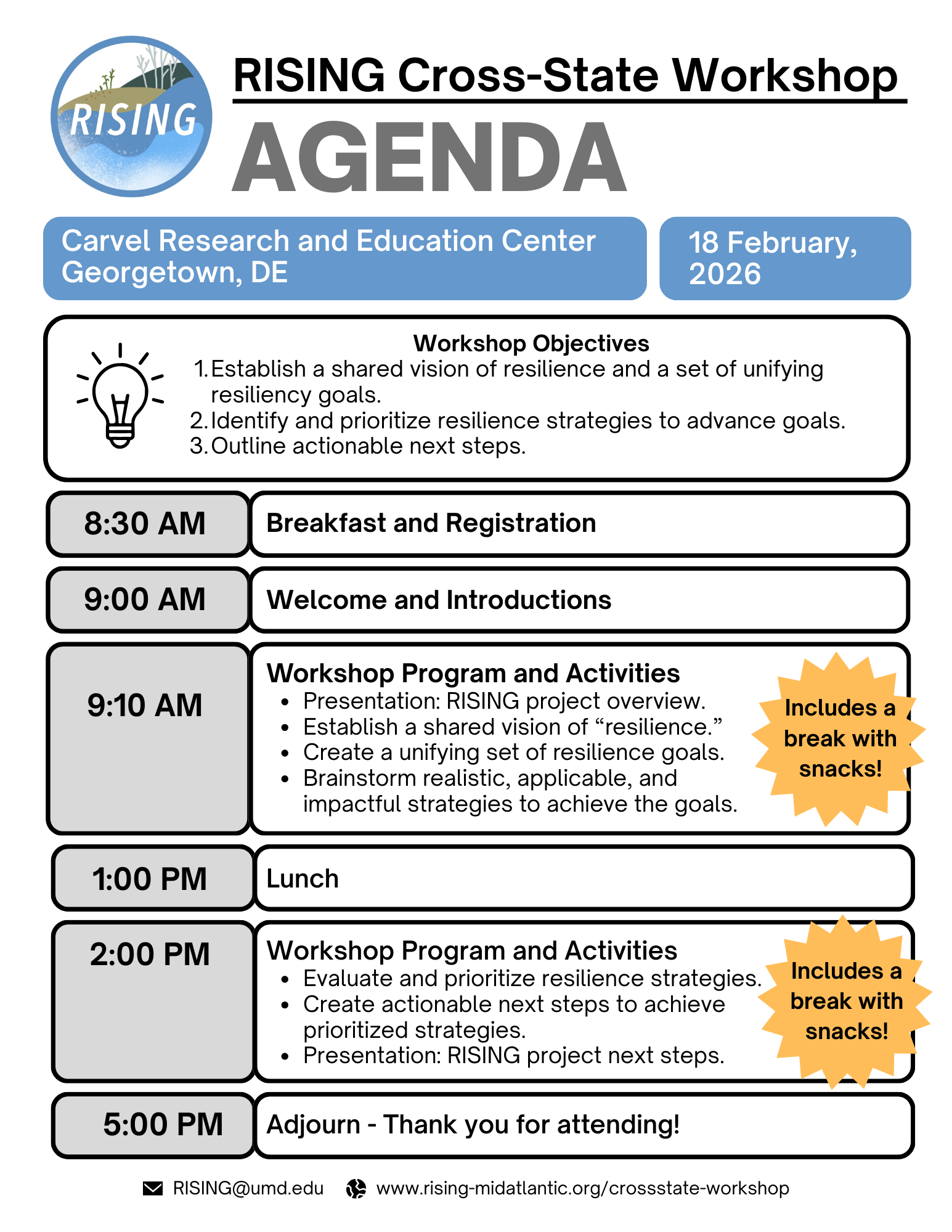
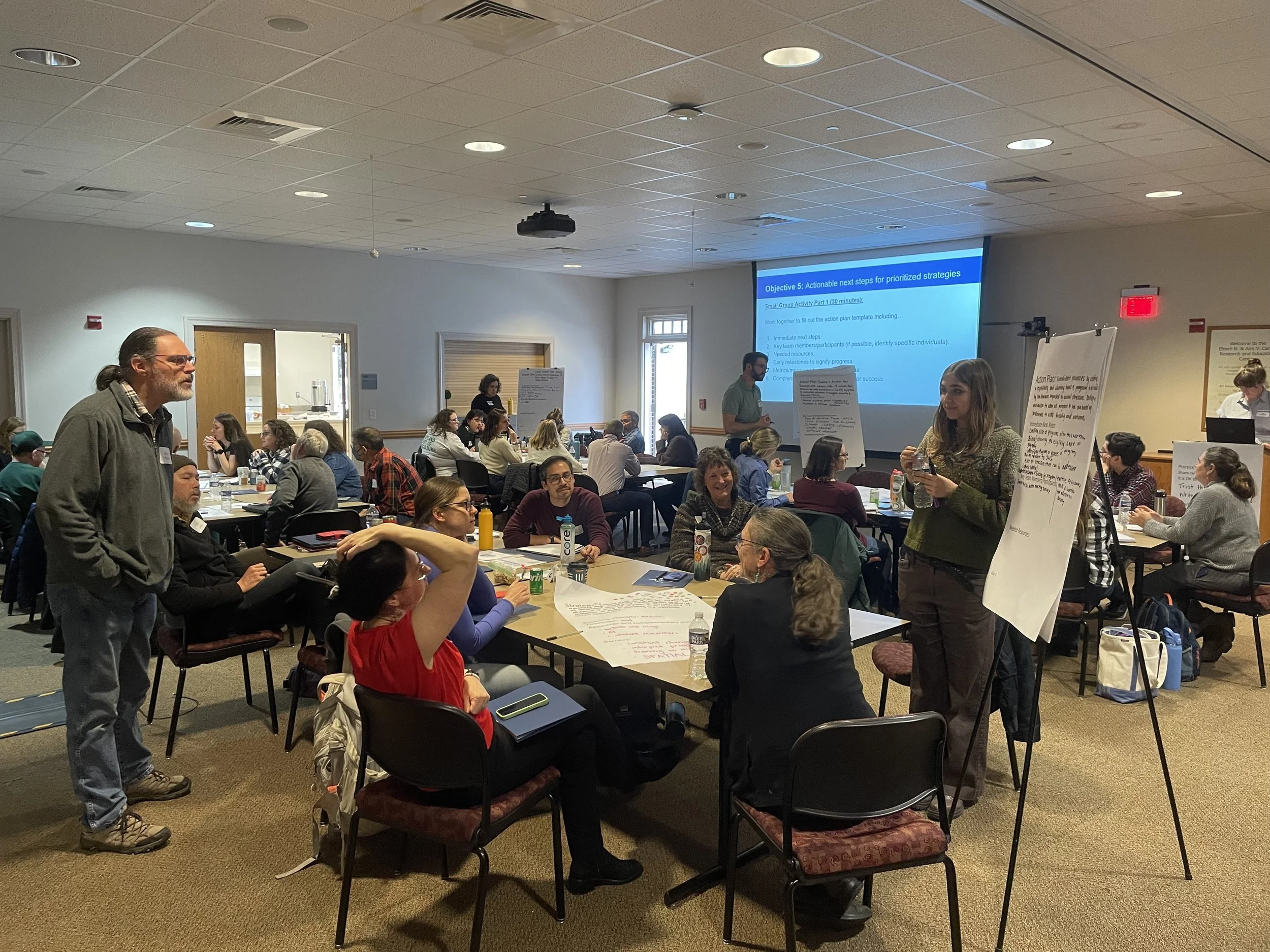
The RISING team hosted the RISING Cross-State Workshop on February 18th, 2026 at the University of Delaware Carvel Research and Education Center in Georgetown, DE. Folks joined us from across Maryland, Delaware, and New Jersey to…
Build a shared vision of resiliency,
Prioritize strategies for improving the well-being and livelihoods of farmers, woodlot owners, and landowners, and
Outline actionable next steps for the RISING project.
Vision Statement
RISING defines resilience as the ability for communities to…
Recover, adapt, and manage the impacts of coastal stressors.
Be proactive and make decisions to protect ecosystem functionality that support livelihoods and enhance well-being in the immediate future and long-term.
Prioritized Strategies
Strategy 1: Research demonstration site for proof of concept/ scenarios and case studies.
Strategy 2: Consolidate resources by creating a repository and clearing house of programs to be used by landowners impacted by coastal stressors. Develop a mechanism to allow all programs to be evaluated by landowners to assess feasibility and outcomes.
Strategy 3: Create a decision support tool equipped with geospatial information on incentive programs and qualification requirements. This tool should allow for support from on ground personnel and should be updated regularly.
Strategy 4: Create a network to identify priority research on private coastal lands to inform policy. Develop scopes of work and apply for funding
Strategy 5: Create stronger links among science, impacted communities, and policy-makers to adapt to coastal stressors.
Strategy 6: Develop a decision tree framework with resources, information, and contacts that enables landowners to identify symptoms of SWI and navigate technical and financial resources.
Strategy 7: Create resources and training opportunities for legislators and decision makers at different scales (local, state, federal) to promote understanding of and responsiveness to coastal stressors.
Strategy 8: Identify, connect, and incentivize early-adopters of conservation, financial support, and other funded programs to facilitate the establishment of “community technical ambassadors” who can advocate for private landowners.
Next Steps
RISING Working Groups turn strategies into action!
Workshop Agenda